Postwar Period
The Narrow Road to the Deep NorthThe Postwar Period is not a clean break from the war but a contested aftermath in which military service, legal judgment, public remembrance, and private recollection produce different versions of what happened. The novel sets the routines of civilian life beside trials and memorials, showing how time can blunt memory without settling questions of responsibility or restoring the lives lost on the Death Railway.
Return to Civilian Life and the Return of Memory
Immediately after the war, Jimmy Bigelow found that it could seem as if the conflict had never happened. For a time, he recalled little of it; other people had accounts of fighting in places such as El Alamein, Tobruk, and Borneo, while jobs, families, children, and the ordinary succession of illness, death, and retirement drew attention toward a life beyond the camps. Even the order of events became uncertain to him: he could no longer tell whether Hobart belonged before or after the camps and the Line. At moments, he doubted that he had been to war at all.
That apparent distance did not last. In old age, after good years and the arrival of grandchildren, the war returned more insistently as the rest of Jimmy’s long life receded from memory. He had stopped playing the Last Post for years, then decades, but at ninety-two, dying in hospital after his third stroke, he raised his bugle with his good arm and the war came back with overwhelming force. What had once been a duty he could perform at Anzac Day ceremonies, POW gatherings, official functions, and occasionally at home had become, in the end, the experience he felt had eclipsed everything else.
Jimmy’s later recollections are not a reliable inventory of events. His sons and other commentators corrected his accounts, pointing out errors and contradictions, but he insisted on the authority of having been there rather than on perfect factual recall. He retained fragments: jokes, stories, the taste of the duck egg Darky Gardiner had given him, and the hope and goodness he associated with the men. He remembered Wat Cooney as someone who waited at the cookhouse until every man had been fed, but no longer remembered that Cooney died on the march to Three Pagoda Pass or its attendant cruelties. The distinction matters: Jimmy’s memory preserves the care he experienced even as it loses the circumstances of death.
The Uneven Work of Legal Judgment
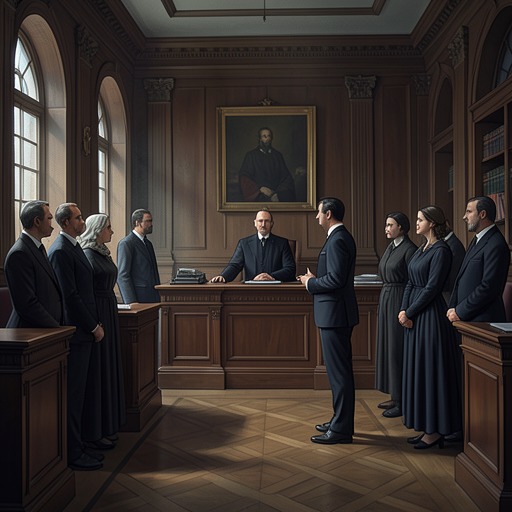
The postwar trials give the aftermath a formal language of evidence and verdicts, but the novel emphasizes how unevenly that language can assign responsibility. Choi Sang-min’s Australian military trial lasted two days, and most of the proceedings were conducted in English, which he understood poorly. The charge concerning the murder of Australian Imperial Force Sergeant Frank “Darky” Gardiner was dismissed because the written evidence was contradictory. Choi was nevertheless convicted of ordering the death of Private Wat Cooney and of lesser offenses involving the withholding of food and medical supplies, and sentenced to death as a Class B war criminal.
The case remained complicated by gaps and competing accounts. Choi said that, as a Korean sergeant, he could not have ordered a prisoner’s death; the prosecution cited an interrogation in which Colonel Kota had said that he did. Choi also argued that Wat Cooney was no longer at the camp when the alleged order was given, but incomplete camp records could not establish that. The verdict therefore emerges from a record that both supports a conviction and leaves important questions unresolved.
Choi declined to seek clemency, believing that prolonging the process would only extend his distress. He also saw a disparity in who faced punishment: in his view, lower-ranking Korean and Formosan guards were being made scapegoats while officers with links to the Japanese nobility were freed. He thought of Major Nakamura, who had not been arrested, and Colonel Kota, who was free again; he suspected that both might be working for the Americans. The novel presents this as Choi’s understanding of the postwar order, not as a definitive account of every case, but it places his sentence beside the uneven fates of other men implicated in the wartime system.
Forgetting, Memorials, and the Uncounted Dead
Public remembrance is also selective. At Yasukuni Shrine, steam locomotive C 5631 is displayed alongside the Book of Souls, which lists more than two million people who died in service to the Emperor of Japan in wars between 1867 and 1951. The shrine’s commemorative framework grants the enshrined dead absolution, and the names include 1,068 men convicted of war crimes after the Second World War and executed. Some had worked on the Death Railway and been found guilty of mistreating prisoners of war.
The plaque beside C 5631, however, says nothing about the railway’s construction or its victims. The scale of the labor and death resists a single agreed total: around 60,000 Allied POWs were among those forced to work, alongside a quarter of a million or more Tamil, Chinese, Javanese, Malayan, Thai, and Burmese laborers. Estimates of deaths among the Asian laborers range from 50,000 to 200,000, and the novel stresses that no one knows the true number. Their names are absent from any comparable book of remembrance. The locomotive and the memorial preserve one kind of history while leaving the workers who built the railway largely unrecorded.
The novel returns to this tension through the treatment of Rabbit Hendricks’ sketchbook. During the cholera outbreak, objects belonging to the dead had to be destroyed to contain contagion. When a pyre maker brought the sketchbook to Dorrigo Evans, he waved it away and ordered it burned. Later, he told Bonox Baker that everything would ultimately be forgotten and that living in the present mattered more. Bonox answered with the remembrance invoked by the phrase Lest we forget. Their exchange places practical survival against the obligation to preserve what the dead leave behind; neither response can undo the loss, and the sketchbook does not survive as a record.
Acknowledgment Deferred
The postwar handling of wartime abuses extends beyond the railway trials. Sato tells Nakamura that Professor Ishiyama hanged himself in prison, while others were sentenced to death, had their sentences commuted, and were eventually released. Sato says that he once feared he might be tried, but that the possibility has passed; he describes both the Americans and the Japanese as wanting the matter forgotten. His account makes forgetting not only a private response to trauma but also a political outcome shaped by decisions about prosecution and release.
Across these different aftermaths, the novel refuses a single measure of closure. Jimmy’s memories fade and then return with force; Choi’s trial turns incomplete evidence into a final sentence; Sato describes prosecutions that did not continue; and the memorial at Yasukuni Shrine names the honored dead while the Death Railway’s mass of unnamed laborers remains uncounted. The Postwar Period thus preserves the distance between surviving a war and establishing what its survivors, victims, and institutions will remember about it.